
Key Takeaways:
- Seeing an occasional ant usually isn’t a big deal. One or two ants may simply be wandering, but ongoing activity or ants getting into food often signals a nest somewhere inside the home.
- Depending on where ants are appearing indoors, your level of concern should vary.
- Most household ants are harmless nuisances, but Carpenter Ants and Fire Ants are important exceptions.
- Winged ants, fine wood debris, or ants found in rarely accessed areas like attics are strong indicators that professional ant control should be contacted right away.
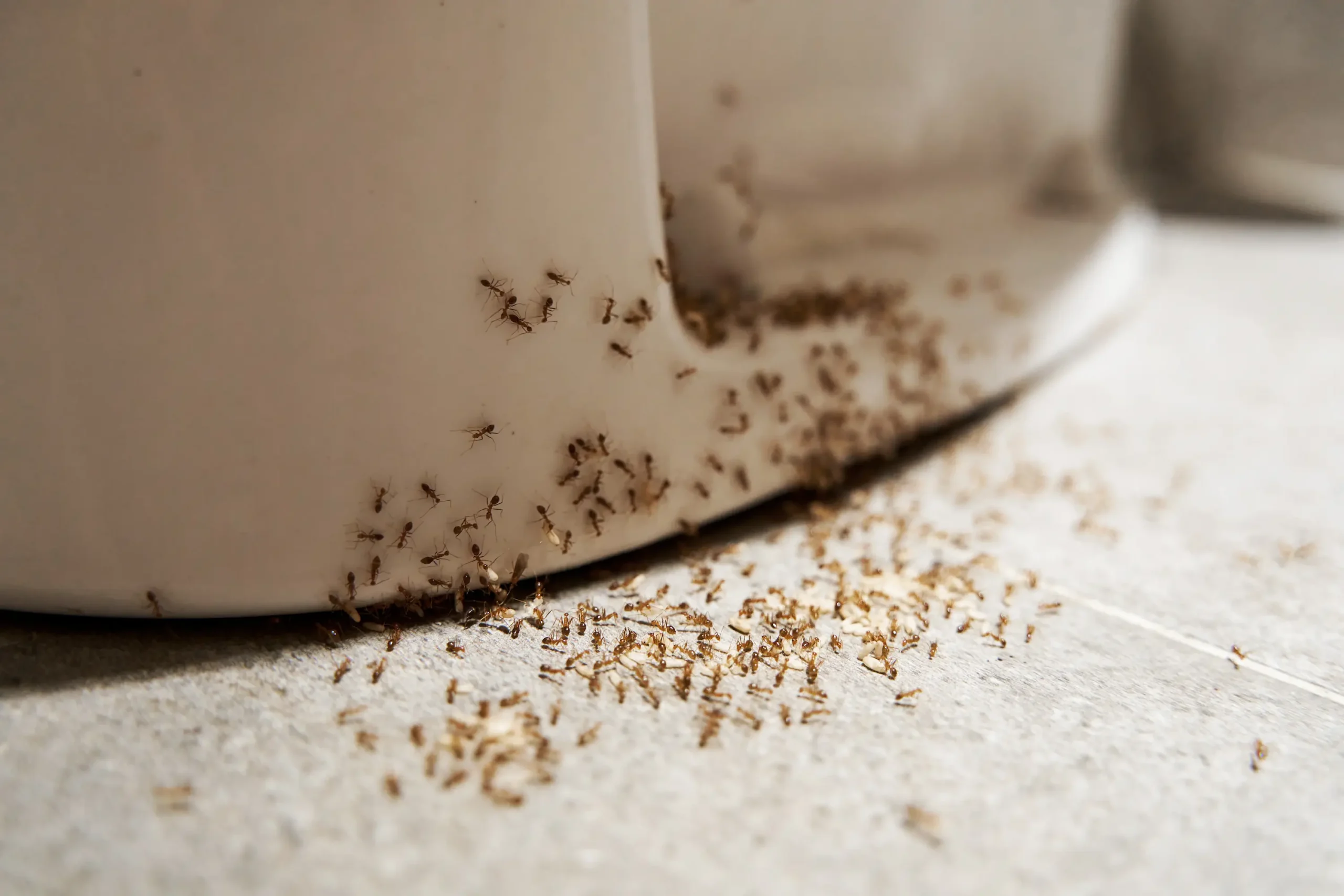
The question of whether ants are a small inconvenience or a bigger problem comes down to the specifics of your situation. Spotting a single ant crossing your counter can be unsettling, but it doesn’t automatically mean trouble. In those cases, ants are simply passing through. But if their visits are frequent or in odd places, it could be a sign you’re dealing with a hidden colony that needs to be addressed.
This guide is designed to help you recognize the difference between minor ant activity and a situation that requires immediate action, so you’ll know when a simple cleanup will do and when it’s time to call in the pros.
Evaluating Your Ant Issue – From Minor to Critical
When ants appear indoors, the first question you should think about is whether they’re just exploring for food or have already set up a nest. The answer will guide your next steps.
If you live in California, an occasional ant sighting isn’t unusual. Rather than reacting immediately, consider the activity on a scale from 1 to 10, with 1 meaning “hardly an issue” and 10 meaning “urgent professional help needed.”
Level 1-3 (Minimal Concern)
At this level, ants are more of a mild annoyance than a real problem. Some homeowners may barely notice them, while others find them irritating but manageable.
- What you might notice: A single scout ant near a window or entry point, or a short trail that appears briefly after heavy rain or extreme temperatures. These sightings are usually inconsistent and short-lived.
- Who they tend to be: Common nuisance species such as Pavement Ants or Odorous House Ants. They aren’t aggressive and don’t cause structural damage, but they are attracted to food and moisture.
- What to do: Monitor the situation. Clean surfaces, eliminate crumbs, and watch for repeat activity. In many cases, the ants move on without further intervention.
Level 4-7 (Professional Help Worth Considering)
At this stage, ants are no longer occasional visitors. Even homeowners with a high tolerance for pests may find the situation hard to ignore. Concerns often shift toward sanitation, food contamination, and ongoing activity.
- What you might notice: Ants appearing every day, or multiple times a day, including inside food containers, on dishes, or consistently around sinks and countertops.
- What it often means: There’s likely a hidden “satellite colony” inside your wall voids, cabinets, or other enclosed spaces. The ants aren’t just foraging anymore; they’re living inside the home.
- What to do: Over-the-counter sprays may reduce visible ants, but won’t eliminate the nest. Baits can help, but if the problem persists, professional ant control is usually the most reliable way to resolve the issue and protect your home and food.
Level 8–10 (Immediate Attention Required)
At the high end of the scale, this ant activity can indicate serious risks, including property damage or safety concerns.
- Who it may be: Large black ants (Carpenter Ants) or aggressive red or reddish-brown ants (Fire Ants).
- Warning signs: Winged ants indoors, which suggest a mature colony, or small piles of sawdust-like debris near baseboards are a common sign of Carpenter Ant activity. These ants are often mistaken for termites, and both require fast, accurate identification.
- What to do: Fire Ants pose a risk of painful stings to people and pets, while Carpenter Ants can cause costly structural damage over time. In either situation, professional treatment is an important first step.
Ant Location Matters – Which Room Are You Seeing Them In?
The area of your home where ants appear can offer important clues about the severity of the situation. Spotting a single ant near a doorway or in the garage is very different from discovering a steady stream in your pantry. The sections below explain what ant activity in different parts of your home may suggest.
Seeing Ants in the Kitchen?
Kitchens naturally draw in ants because they provide reliable food and water sources. When ants show up here, they’re typically searching for sugar, grease, crumbs, or moisture. While they usually won’t harm the kitchen itself, they can contaminate food and cooking surfaces.
Concern Level: Moderate.
Seeing Ants in the Bathroom?
Bathrooms commonly attract ants looking for moisture rather than food. Repetitive sightings may point to plumbing leaks, hidden condensation, or damp wood behind walls and fixtures. These conditions are particularly attractive to Carpenter Ants, which nest in moist or decaying wood and can lead to significant structural damage over time.
Concern Level: Moderate to High.
Seeing Ants in the Basement?
Basements, especially unfinished ones, often contain cracks, seams, and utility entrances that make it easier for ants to get inside. Occasional ants in this area are usually just passing through. If you don’t see heavy trails or movement into living areas, the problem can typically be managed by sealing entry points.
Concern Level: Low to Moderate.
Seeing Ants in the Attic?
Since attics are rarely disturbed, ant activity here often signals a colony that’s been active for quite some time. Carpenter Ants frequently nest in insulation or wooden framing in attics, making them a potential threat. Because these infestations can grow unnoticed for months or even years, professional evaluation and treatment are highly recommended.
Concern Level: High.
Can Ants Damage Your Home?
Most household ant species don’t cause structural harm. Ants like Little Black Ants are mainly interested in food and are considered nuisance pests. Carpenter Ants, however, are a major exception.
Though they’re often confused with termites, Carpenter Ants don’t eat wood. Instead, they carve tunnels through it to build nests, which can damage beams, window frames, and wall studs.
Over time, this activity can weaken your home’s structure. Small piles of fine, sawdust-like debris near wooden areas are an important warning sign.
Are Ants a Threat to People or Pets?
Most ants found indoors pose little risk. Bites are rare and usually minor.
However, Fire Ants are the primary exception. They are aggressive and will sting repeatedly when disturbed. Their stings are painful and can trigger serious allergic reactions in both people and pets, making them a real safety concern. If Fire Ants are present, professional treatment is strongly recommended.
Should Ants Be Considered Dangerous?
In most situations, ants are more irritating than hazardous. A few stray ants aren’t cause for panic. However, persistent activity, ants contaminating food, winged ants, wood debris, or ant activity in the attic should never be ignored.
If you’re unsure which type of ant you’re dealing with, or you’re ready for the issue to be handled today, O'Connor Pest Control can help. We offer reliable ant control services in California, including proper identification, risk assessment, and effective treatment options.
Contact us today to protect your home and regain peace of mind.


