
Key Takeaways:
- The sudden increase in fall spider sightings is a result of indoor mating cycles and changing prey patterns, debunking the common myth that they are invading from the outdoors to escape the cold.
- The vast majority of autumn spiders have actually lived hidden inside the home since spring, with mature males only venturing out into plain sight to search for mates.
- A shift in the behavior of standard household pests during cooler weather causes spiders to relocate their webs and hunting grounds to more visible areas.
- Effective spider management relies heavily on eliminating indoor hiding spots and targeting the primary insect food sources that sustain them.
Why Do You See So Many Spiders in California Homes in the Fall?
If you have noticed a sudden surge of spiders darting across your floors or appearing in your hallways as autumn approaches, don’t worry, you’re not living in a horror movie – lots of California residents are experiencing the same thing. The good news is that most (but not all) of these spiders are harmless.
It is a common belief that these arachnids are invading from the outdoors to escape the cooling California weather. However, the reality behind this seasonal spike in activity is entirely different.
Understanding why spiders suddenly become more common in the fall — and which species you are actually looking at — is the first step toward effective, long-term pest management.
The Real Reason Spider Activity Increases in the Fall
The idea that outdoor spiders migrate into California homes to seek warmth during the fall is a myth. Spiders are cold-blooded, but they withstand subzero temperatures outdoors because their bodies naturally produce antifreeze compounds.
The sudden increase in indoor spider sightings during autumn is driven by two biological factors:
- It’s Mating Season: Most of the spiders you see in the fall and winter – up to 95% – have been there the whole time. They’re indoor species that have lived in your crawlspaces, wall voids, or basements since spring. They only venture out of their hiding places when they need to – until autumn, when mature males leave to search for females to mate.
- Shifting Prey: As temperatures drop, standard household pests like flies, moths, and beetles seek shelter indoors. Spiders naturally shift their webs and hunting grounds to areas with the highest concentration of this active food source.
Common Spider Species in California Houses
There are many spider species in our region, but the vast majority of indoor spider sightings are from these five:
| Spider | Appearance | Bite Risk | Ventura County Likelihood | Why Visible in Fall |
| Black Widow | Shiny black; red hourglass on belly. | High (Medically significant; seek doctor) | Moderate to High (Garages, woodpiles, crawlspaces) | Females reach full size and sit openly on webs to guard egg sacs, rather than hiding. |
| Yellow Sac Spider | Small; pale yellow or cream-colored. | Moderate (Painful bite, localized swelling) | High (Inside living spaces, closets, ceilings) | Mature males leave their hidden nests to roam walls looking for mates. |
| Wolf Spider | Large, hairy; gray/brown camouflage patterns. | Low (Harmless venom; bite feels like a bee sting) | Moderate (Ground floors; common near fields/hills) | They hunt on foot and follow ground bugs. |
| Common House Spider | Small, dull brown/gray; mottled abdomen. | Minimal (Harmless; rarely punctures skin) | Very High (Window tracks, corners, garages) | Populations peak, making messy cobwebs much more noticeable. |
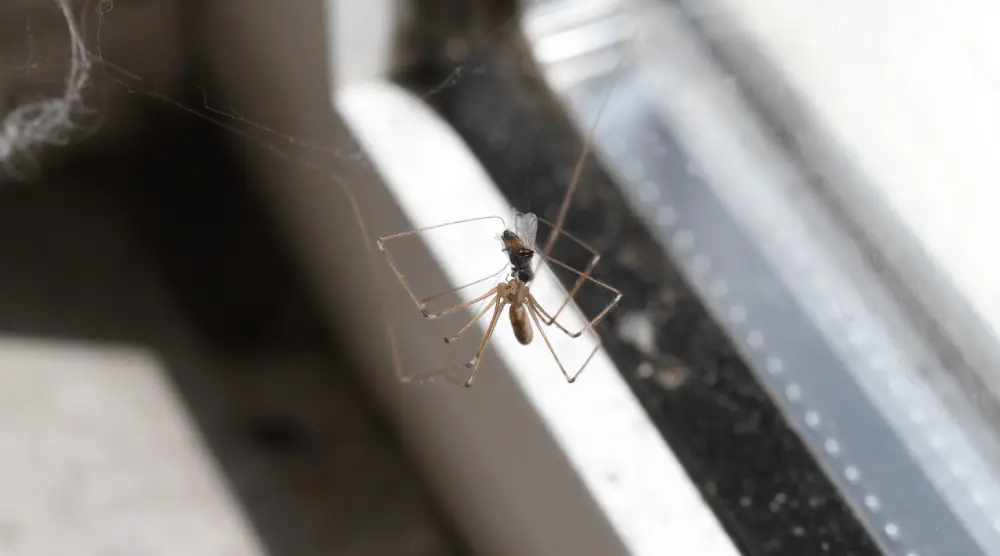
| Cellar Spider | Long, skinny legs; tiny tan body. | None (Harmless to humans and pets) | Very High (Basements, under sinks, high ceilings) | They move into open view to trap flying insects coming indoors. |
Proactive Steps to Minimize Indoor Spider Activity
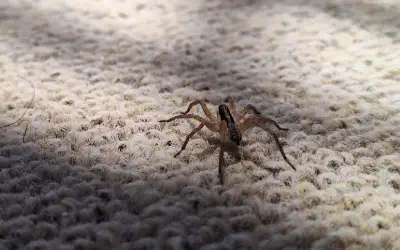
Wolf spiders like this are one of the most frequently spotted indoor spiders in houses in Ventura County & Santa Barbara County.
Because the majority of fall spiders are already established indoors, pest management requires a combination of exclusion and food-source reduction:
- Eliminate Hiding Spots: Keep basements, garages, and closets organized. Store seasonal clothing and shoes in sealed plastic bins rather than cardboard boxes.
- Target the Food Source: Vacuum frequently along baseboards, under furniture, and in corners to remove the insects, egg sacs, and webs that sustain spider populations.
- Seal Entry Points: Install tight-fitting door sweeps on all exterior doors, and replace damaged window screens to prevent new insect prey from entering.
- Adjust Exterior Lighting: Switch outdoor porch lights to yellow LED “bug bulbs.” Standard white lights attract nocturnal insects, creating an artificial feeding ground for spiders right next to your doors and windows.
- Invest in Year-Round Pest Protection: A professional exterminator can help keep you ahead of new pest threats as they emerge, dramatically reducing the likelihood of secondary infestations like spiders. PestFree365+, our year-round pest prevention plan, protects homeowners against 39 of the most common household pests in California, including spiders.
Professional Spider Control in Ventura County & Santa Barbara County
When indoor spider populations become unmanageable, DIY methods often fail to target the root of the problem. A comprehensive treatment plan must address both the spiders themselves and the underlying insect infestations that draw them into living spaces.
At O’Connor Pest Control, we provide targeted residential pest control solutions tailored to your home’s specific layout. Our team begins with a meticulous inspection of your perimeter, crawlspaces, and basement to identify entry vectors and nesting zones.
Protect your home this season. Contact O’Connor Pest Control today for a free estimate on spider control in California!


